
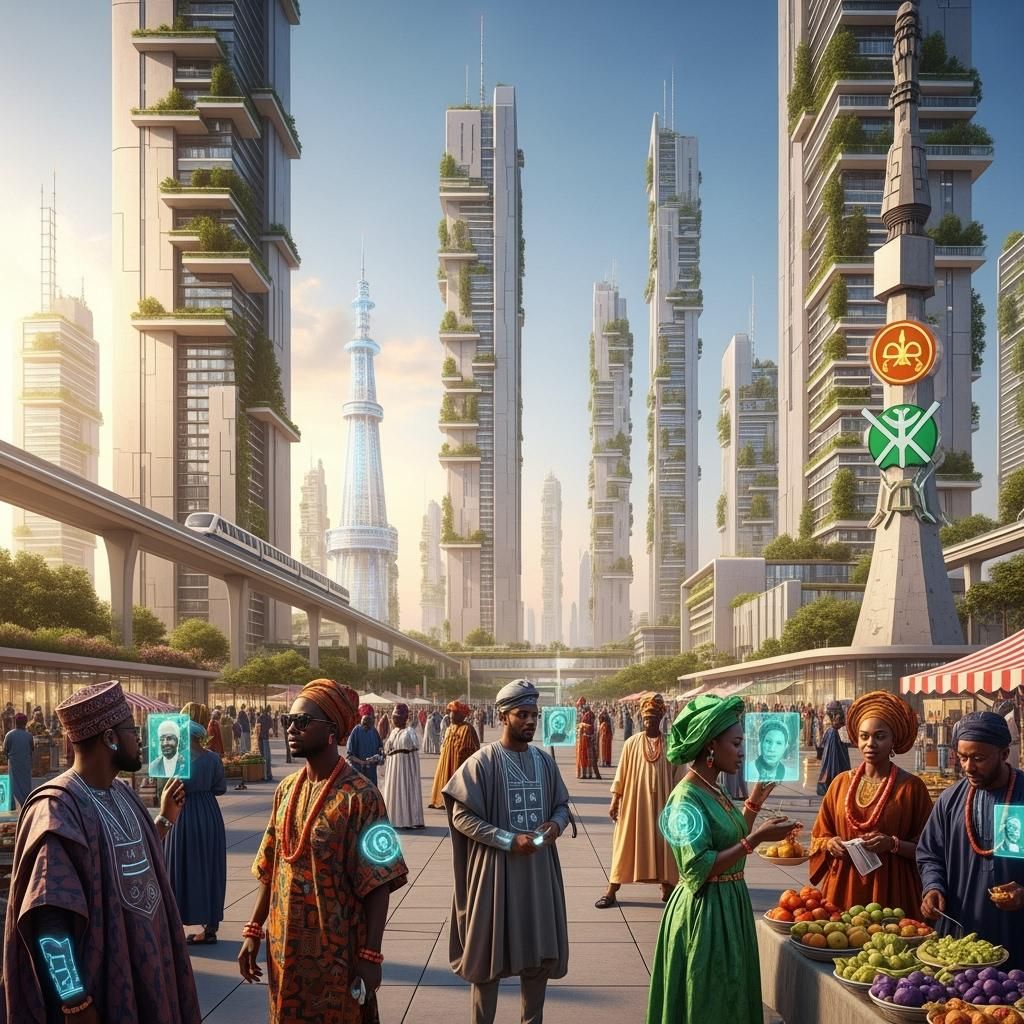
How would you design the city of the future?
THE FUTURE CITY OF NIGERIA
### Historical Origins
Nigeria’s history is deeply rooted in ancient civilizations. The Nok culture, which thrived around 1000 BCE, is one of the earliest known societies, renowned for its intricate terracotta sculptures. By the 15th century, powerful kingdoms like the Oyo Empire and the Kingdom of Benin emerged, showcasing advanced governance, trade networks, and cultural achievements. The arrival of Europeans in the late 15th century marked a new chapter, culminating in British colonization in the late 19th century. Nigeria was officially amalgamated into a single entity in 1914, leading to independence on October 1, 1960. This historical context lays the foundation for understanding the complexities of modern Nigerian cities.
### Identity and Tribes
Nigeria is home to over 250 ethnic groups, with three major tribes—Hausa, Igbo, and Yoruba—each contributing uniquely to the nation’s identity. The **Hausa**, primarily in the north, are known for their roles in agriculture and trade, often engaging in occupations such as farming, trading, and handicrafts. The **Yoruba**, based in the southwest, are celebrated for their rich cultural traditions, particularly in arts and religion, with professions ranging from education to technology. The **Igbo**, predominantly found in the southeast, are recognized for their entrepreneurial spirit, excelling in commerce and manufacturing. This diversity fosters a vibrant urban culture, particularly in cities like Lagos and Abuja, where various identities coexist and interact.
### Religions
Religion significantly influences Nigeria’s societal framework, with Islam and Christianity being the dominant faiths. Approximately 50% of the population practices Islam, mainly in the northern regions, while around 40% are Christians, predominantly in the south. Indigenous beliefs also play a crucial role, often intertwining with these major religions. This religious diversity shapes community interactions and will likely continue to influence social dynamics in urban areas.
### Urbanization and Growth
Nigeria is one of the fastest urbanizing countries in the world. Projections indicate that by 2050, over 60% of the population will reside in urban areas. Cities like Lagos, with an estimated population of over 14 million in 2023, exemplify this rapid growth, making it one of the largest cities in Africa. However, this urbanization presents significant challenges, including inadequate infrastructure, housing shortages, and environmental concerns. Effective urban planning and investment in public services are essential to accommodate this growth.
### Creativity and Popularity
Nigerian cities are becoming global cultural hubs, particularly in the realms of music and film. The rise of Nollywood, the Nigerian film industry, and the global popularity of Afrobeats have positioned Nigeria on the world stage. In 2021, the creative industry was estimated to contribute over $7 billion to Nigeria’s GDP, highlighting its potential for further growth. This cultural renaissance not only enhances the nation’s global reputation but also fosters a sense of national pride and unity.
### Charity and Community Spirit
Charity and community support are integral to Nigerian culture. Numerous NGOs and grassroots organizations work tirelessly to address social issues, from education to healthcare. This spirit of giving reflects the zeal of Nigerians to uplift their communities, fostering resilience and social responsibility.
### Conclusion
The future of Nigeria’s cities is a promising blend of historical richness and contemporary dynamism. As urban centers continue to evolve, they will reflect the nation’s diverse identities, creativity, and resilience. By addressing challenges and leveraging cultural strengths, Nigerian cities can emerge as thriving examples of innovation and inclusivity. Through collaboration and community spirit, the urban landscape of Nigeria will continue to grow and flourish, embodying the aspirations of its people and paving the way for a brighter future.





 Ishaya Zephaniah
You must be logged in to post a comment.